Search

When Impressionism is reinterpreted by Pop Art!
DOI: 10.17160/josha.13.2.1127
JOSHA is proud to publish paintings and writings from the extensive work of Joëlle Kem Lika. The artist Joëlle Kem Lika was born in Aquitaine, the southwest of France. After studying art, training as a psychotherapist and sophrologist and many years of practice, she has returned to the place of her cradle on the Atlantic. Her creative work (Toile d'Or "Art en Capital" 2013) has taken her to galleries and museums around the world. With strong color and convincing strokes, she shows us the unheard-of power of the sea, the all-pervading life energy of sky and water and the emotional message of gorgeous flowers. Accompanied by her own texts, she takes the reader of this article into an emotional world of vitality and inner peace. Karen Lappon, International Confederation of Art Critics, wrote: "Her creative process springs from the recesses of her inner self, only to find its place on the canvas, and return to the heart of the painter in the form of universal energy."

Berufliche Identität von Studierenden als eines der Schlüsselprobleme der modernen Psychologie - Professional Identity of Students as one of the Key Problems of Modern Psychology
DOI: 10.17160/josha.12.6.1109
The formation of students' professional identity is considered in modern psychology as a complex and multi-level process that determines the success of their future activities and personal development. Professional identity is understood as the integration of personal and professional qualities, self-awareness in a future profession, stability of professional values and norms. An important factor is the educational environment of the university: interaction with teachers, participation in professional communities, and internships help strengthen identity. A study using the methodology for studying the status of professional identity (MISPI) by A.A. Azbel compared humanities students in Armenia and Germany. Armenian participants demonstrated a more pronounced emotional and value-oriented component, while German students tended to a rational and behavioral approach. These differences reflect differences in educational systems and social expectations.
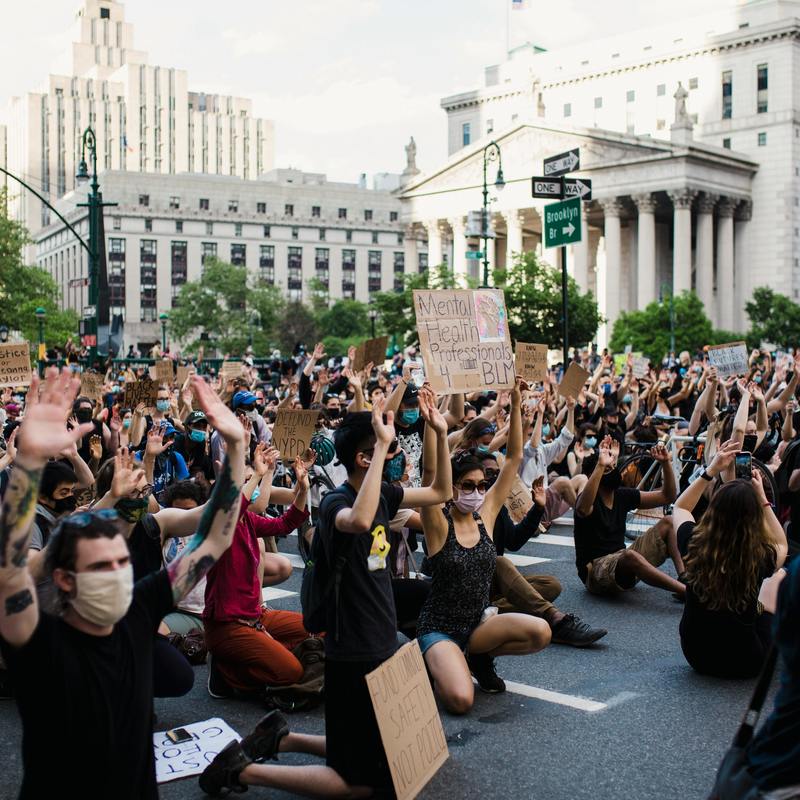
Nobelpreisträger: Hochschulen bilden kritische Denker aus. Deshalb werden wir ins Visier genommen
DOI: 10.17160/josha.12.5.1093
In this compelling essay, Nobel Laureate Joachim Frank denounces the resurgence of authoritarianism and the spread of fascist tendencies threatening democracy and academic freedom in the United States. Reflecting on his early life in Nazi Germany and his five decades as a scientist and professor in America, Frank warns that universities, centers of critical thinking, diversity, and open debate, are now being targeted by political forces that seek control through fear, censorship, and ideological manipulation. He exposes how attacks on higher education, science, and free expression are intertwined with broader patterns of discrimination, propaganda, and the dismantling of democratic institutions. Frank’s message is both urgent and hopeful: defending universities means defending truth, reason, and the very essence of a free society.

Ordinary General Meeting 2024 of the International Academy of Sciences and Arts – Protokoll der Ordentlichen Hauptversammlung 2024 der Internationalen Akademie der Wissenschaften und Künste e.V. (IASHA)
DOI: 10.17160/josha.11.6.1022
IASHA e.V is a registered non-profit society to promote sciences, humanities, research, art, culture, education and individual vocations, including editorial support of this exceptional journal and annual awarding of Demetrios prizes for outstanding bachelor, master and doctoral theses. The association is entitled to issue tax-effective certificates for donations and membership fees. The annual fee is 100 €. General meetings take place bi-annually. You find here the minutes of the general meeting of November 8, 2024. We are soliciting new members and more donations in order to boost the global altruistic mission of IASHA e.V. We encourage you to become a member of IASHA e.V. and/or to support us with your donation. Further information and an application form for membership can be found on the homepage of IASHA e.V. under www.iasha.org.

Arbeitszeiterfassungspflicht an privaten Hochschulen – auch für Professorinnen und Professoren? - Mandatory recording of working hours at private universities - also for professors?
DOI: 10.17160/josha.10.5.919
In September 2022, the Federal Labour Court ruled that employers are obliged to introduce a system that records the start and end of their employees' daily working hours. Since, according to corresponding regulations in the higher education or civil service laws of the federal states, the working time law does not apply to university teachers at state universities, the question arises as to which regulations apply to university teachers at private universities. The following article is dedicated to this problem and deals with a draft bill of the Federal Ministry of Labour and Social Affairs on the revision of the Working Hours Act of March 2023. The paper was previously published in Ordnung der Wissenschaft Issue 03, Volume 2023 (https://ordnungderwissenschaft.de/wp-content/uploads/2023/06/Wertheimer.pdf).

“Until grey hair appears on the hands and feet”- On the Significance of Human Body Parts in African Idiom, Using the Example of the Idioms of the Fon from Benin
DOI: 10.17160/josha.10.5.916
Idiomatic is a branch of lexicology dealing with idioms. It is the study of the peculiarities of a language, a dialect, and the totality of idioms of a language. While it is having already been the subject of several studies in a so-called written culture as Germany, it has been sparsely researched in societies with a strong oral tradition, such as those in Africa. This article therefore focuses on 56 idioms of the Fon from Benin (West Africa). The focus is on the significance of human body parts in the Fon idioms and on their cultural aspect. The aim of the paper is to fill the gap in Beninese idiom in particular and in Africa in general.

The Power of Thought Over Thinking - Die Herrschaft des Gedankens über das Denken
DOI: 10.17160/josha.10.3.907
This article is inspired by a quotation from Heinrich Heine (1833) („No, we do not seize an idea, but the idea seizes us and kneads us and whips us into the arena that we, like forced gladiators, fight for it”), in which he refers to the power that thoughts can gain over the thinking person. The paper explores this perspective on thinking and asks how it can happen at all that thoughts acquire power. To this end, it provides examples of thought phenomena such as fixed ideas, prejudices, dogmatism, fundamentalism, and conspiracy theories. The question then arises as to what kind of conception of thinking emerges if one foregrounds the content of thought rather than the cognitive processes, as is common today. These considerations lead to assumptions about what thoughts are, what makes them persistent and why a flexible, reflective handling of them so often fails. Recommendations on how to accomplish a critical way of dealing with thoughts are indicated at the end.

Ein Beitrag zur Künstliche Intelligenz – A Contribution to Artificial Intelligence
DOI: 10.17160/josha.10.2.892
This paper will not be able to cover the subject comprehensively, rather it will highlight and explain major lines of thought in Artificial Intelligence (AI). Mathematics will be largely avoided. The paper describes the elementary working principles of today's AI, points to a number of successful applications, and presents perspectives for the future. This paper was previously published in Ordnung der Wissenschaft (OdW) Issue 02/2023 (https://ordnungderwissenschaft.de/wp-content/uploads/2023/03/02_02_Burkhardt.pdf).
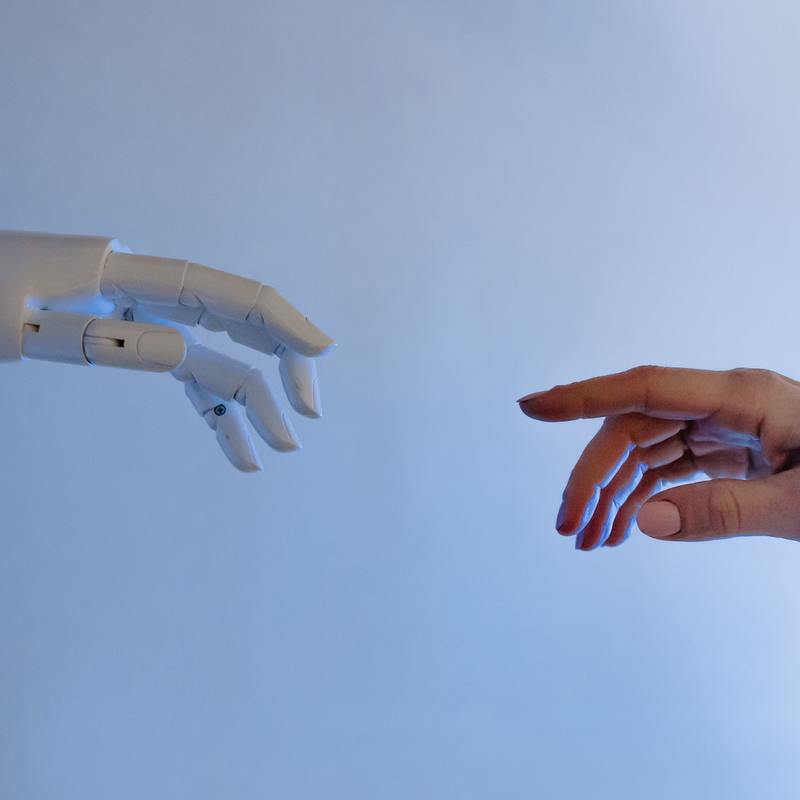
Künstliche Intelligenz in der Krebstherapie - Artificial Intelligence in Cancer Therapy
DOI: 10.17160/josha.10.2.875
The number of computer- and data-based tools is rapidly increasing in the field of oncology. Corresponding methods are finding their way into almost all areas of application, from diagnostic systems and tumour modelling to prognosis of disease progression. However, the sheer combinatorial complexity of this disease, resulting from more potential combinations of cancerous mutations than atoms in the universe, leads to the need for cancer treatment optimised for individual patients. The use of artificial intelligence to optimise therapeutic interventions aimed at controlling cancer within clinically meaningful limits is still a very uncharted territory that has rarely been entered beyond pure in silico experiments. In this manuscript, we explain the basics of artificial intelligence, show some applications already established today, provide a vision of an AI-controlled therapeutic system, and briefly discuss some general ethical considerations.
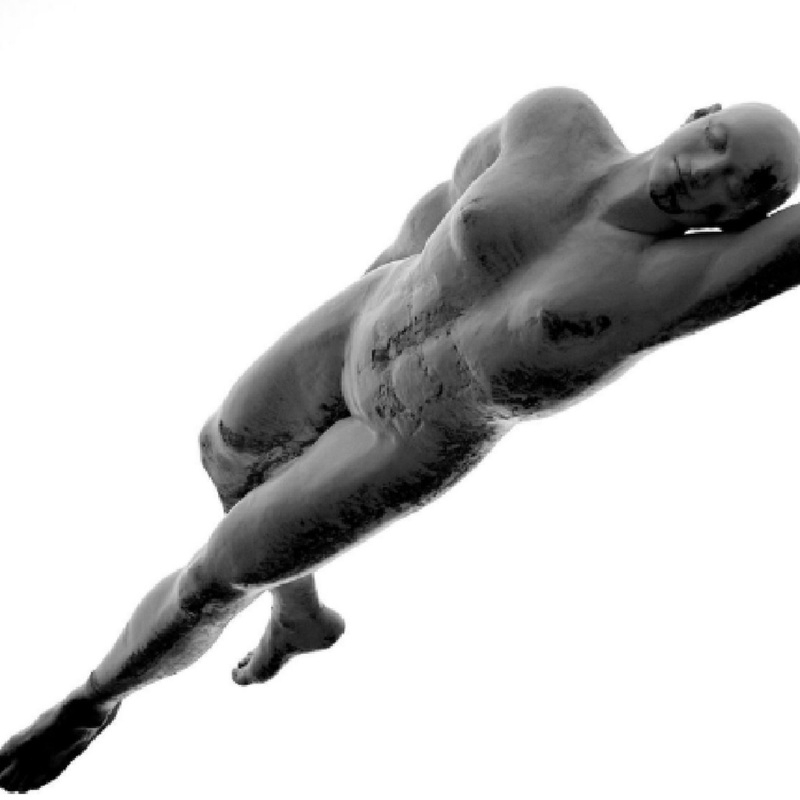
Das Regime des nackten Überlebens The Regime of Bare Survival
DOI: 10.17160/josha.10.1.872
Reflection on Hannah Arendt can show: If we let ourselves be driven by the idea of avoiding death at all costs, there is not much left of life. Everything in life is connected with danger for life. We have to first and foremost accept our finiteness and our mortality. Then we must ask ourselves what is worth living for and what is worth the risk of dying for.